Quincy Market And Faneuil Hall Food Guide: What To Eat Downtown
Quincy Market has been feeding downtown Boston since 1826. This guide separates the real market from the tourist noise, covers what to eat inside and nearby, and explains when a guided walk beats going alone.
Short answer
Quincy Market is a 1824-1826 granite market hall attached to Faneuil Hall, which was built and gifted to the town in 1742. Dozens of food stalls serve chowder, pizza, seafood and sweets in one walkable complex. Entry is free; a self-guided tasting crawl costs only what you order at the counters, versus from $135.45 for the guided downtown food and history tour.
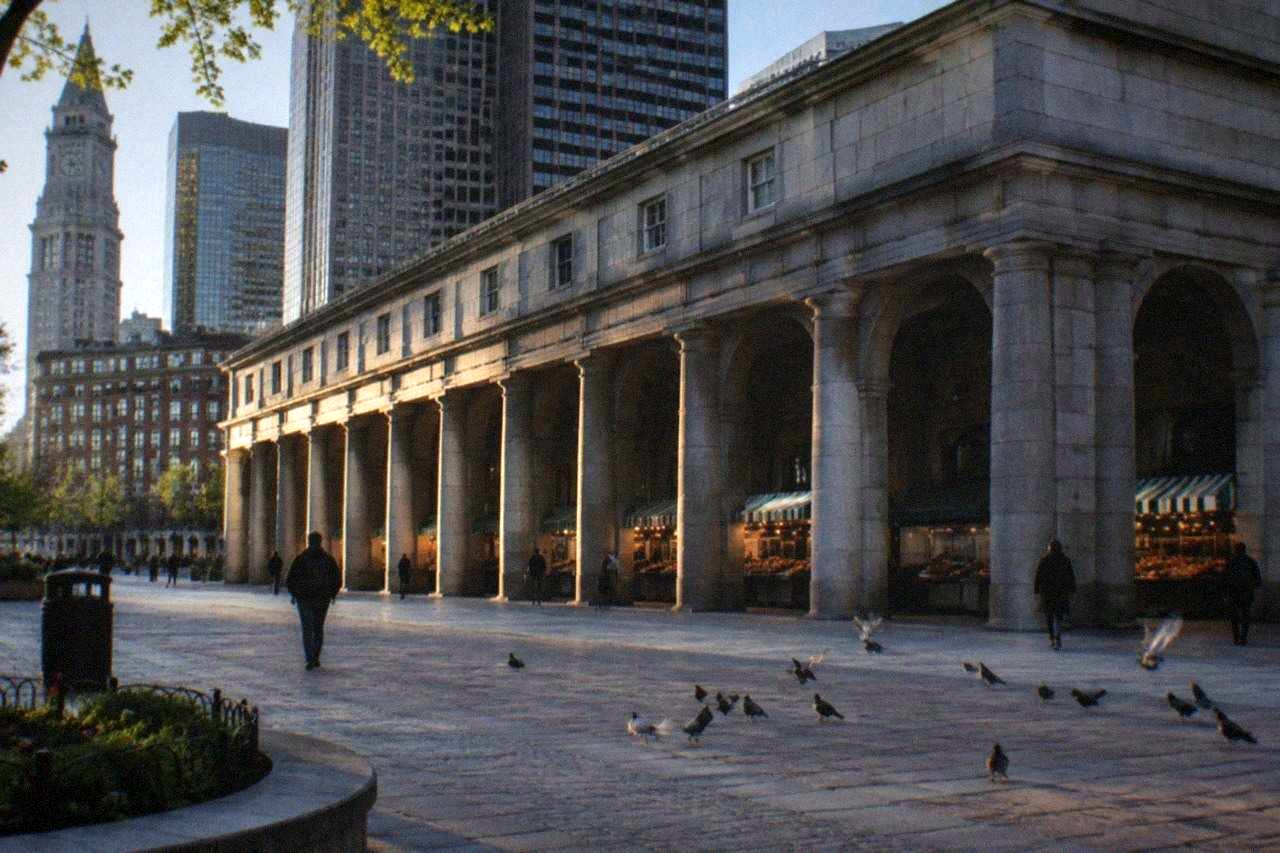
Faneuil Hall has been a marketplace and a public meeting space since 1742, when merchant Peter Faneuil built it and gifted it to the town. Quincy Market, the long granite colonnade behind it, followed in 1824 to 1826 when the old market space could not keep up with a growing city. Together they form the most visited food complex in downtown Boston, and one of the most misunderstood. Locals roll their eyes at parts of it, tourists line up for clam chowder in bread bowls, and both reactions are partly right.
This guide walks through what the complex actually is, what the food is really like inside, what a self-guided visit costs, and how the guided downtown tours route through or near the area. For anyone weighing a full weekend of eating across the city, our Boston Food Tours coverage includes neighborhood guides for the North End, Chinatown, Cambridge and the Seaport waterfront.
What Are Quincy Market And Faneuil Hall, Really?
Faneuil Hall is a 1742 marketplace and meeting hall, now a National Historic Landmark within Boston National Historical Park, while Quincy Market is the 1824-1826 granite market expansion behind it, added to the National Register on November 13, 1966. They are two connected buildings with one shared food identity, and the distinction matters when you plan a visit.
The two buildings solve different problems from different centuries. Faneuil Hall was built and gifted to the town in 1742 as a marketplace and public meeting space, expanded in 1805-1806, and it remains part of the National Park: the National Park Service documents the building's history and its role in Revolutionary-era public debate at its Faneuil Hall history page. It is a serious historical site first, and the food action sits around and behind it.
Quincy Market, then called the Faneuil Hall Market, went up between 1824 and 1826 to expand market space for a city that had outgrown its wharves and stalls. The National Archives record its National Register designation from November 13, 1966, and the building kept its long colonnade, its central rotunda and its flanking North and South Market buildings. The food stalls, pushcarts and sit-down eateries that fill it today are the modern commercial layer on a genuinely old structure.
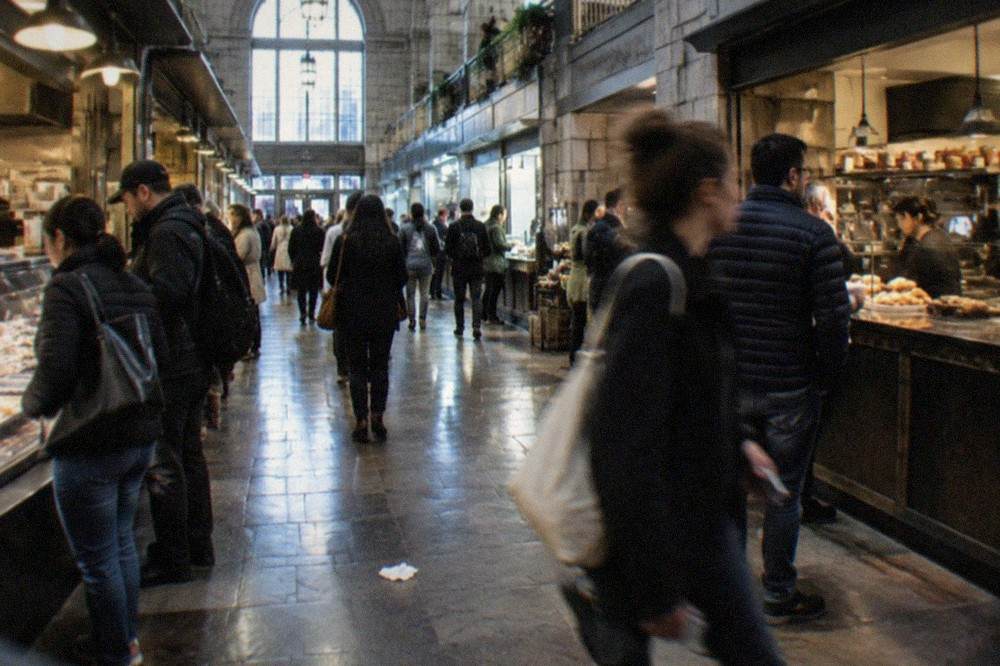
For food planning purposes, treat the complex as one zone. Faneuil Hall and Quincy Market face each other across a plaza, the North and South Market buildings bracket the central colonnade, and street performers, pushcarts and crowds fill the gaps between them. Everything is a short walk from the harbor, close to Government Center, and about fifteen minutes on foot from the North End.
| Building | Built | Original purpose | What it is today |
|---|---|---|---|
| Faneuil Hall | 1742, expanded 1805-1806 | Marketplace and public meeting hall | National Historic Landmark, National Park site, visitor center, shops around the ground level |
| Quincy Market | 1824-1826 | Expanded market space for the growing city | Food hall with dozens of stalls and seating in the central colonnade |
| North and South Market | Flanking wings of the market complex | Produce and dry-goods merchants | Retail, restaurants and offices bracketing the food hall |
Is Quincy Market Worth Visiting For Food?
Yes, with honest caveats. Quincy Market concentrates dozens of eateries in one 1826 building, which makes it the easiest place in Boston to sample chowder, lobster rolls, pizza and cannoli in a single hour, and entry costs nothing. The trade-off is crowds and prices pitched at visitors, which is why many travelers pair a quick stop here with a deeper tour elsewhere downtown.
The strongest case for Quincy Market is logistics. On a short visit, or with a family whose appetite varies by the minute, the food hall removes every decision friction: one roof, one seating area, and a range that runs from New England clam chowder and lobster rolls to pizza, sandwiches, sweets and coffee. A self-guided crawl costs only what you order at the counters, so budget by item rather than by ticket; three or four small items split between two people is the pattern most grazers fall into, and the total lands well below any guided tour price on the roster.
The honest weakness is that the complex is a tourist hub first. Weekend afternoons put long lines at the best-known counters, seating is a scramble at peak hours, and the food skews toward versions of Boston classics built for people eating them once. That is not a reason to skip it. It is a reason to time it well: weekday mornings are noticeably calmer, the early dinner window thins the crowds, and the building itself rewards slow looking once you have food in hand.
If your priority is depth over convenience, the guided downtown option changes the equation. The "Food & History Combo Walk" runs about 3 hours through the Freedom Trail's food story, holds a 5.0 rating from 45 reviews, and starts from $135.45 per person. It is a different product from a food hall crawl, and for some travelers it replaces the self-guided stop entirely.
The three tours above bracket the downtown eating question nicely: the history-and-food walk that routes through this area, a Chinatown alternative for dumpling-focused eaters, and a longer seafood-and-chowder walk for visitors who want the waterfront story. Chinatown sits about a ten-minute walk from Quincy Market, which makes it the easiest swap if the food hall feels thin.
What To Eat Inside Quincy Market On A Self-Guided Visit
Plan three to five small items rather than one big meal: a cup of chowder, a lobster roll or a smaller seafood bite, a slice or a sandwich, and something sweet, split across the colonnade's counters. You pay per item at each counter, order at the quieter counters first, and claim seating before your last item, since tables go fastest between noon and 2 PM.
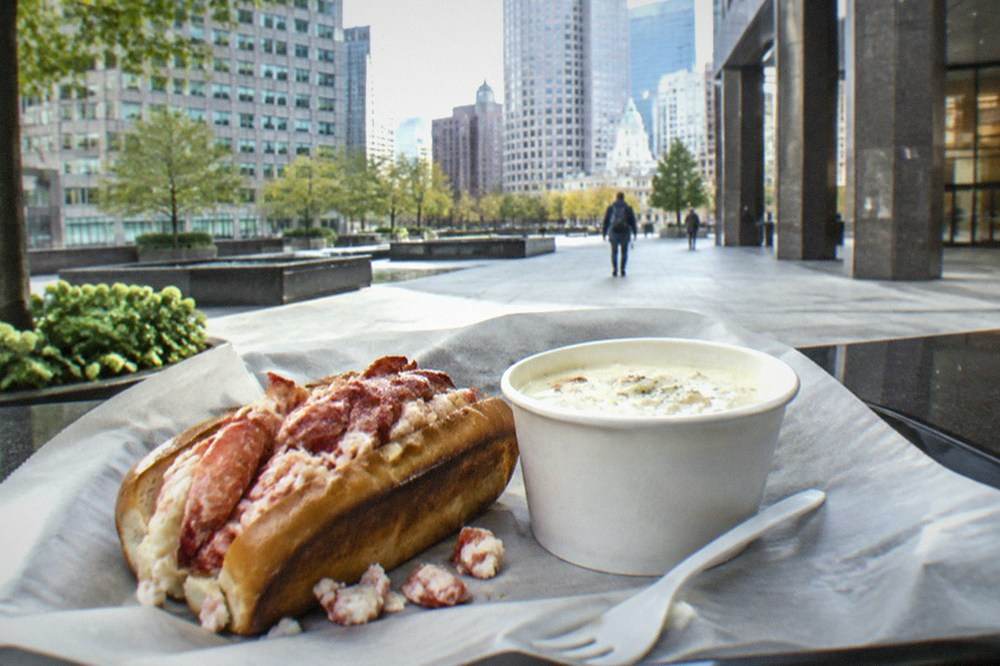
The chowder question comes first for most visitors. New England clam chowder is the single most-ordered item in the complex, served by the cup or bowl, sometimes in a bread bowl, and the versions here are consistent and crowd-pleasing rather than transcendent. Order a cup, not a bowl, on a crawl; it leaves room and money for everything else. Chowder is also the cheapest way to taste the city's signature dish before committing to a full seafood meal anywhere else in downtown.
Lobster rolls are the second signature. Expect the downtown-complex premium on price, and treat the roll as one tasting stop rather than the whole meal. Anyone prioritizing lobster rolls as a serious food mission should read our dedicated Boston lobster roll guide, which compares the waterfront shacks, the North End counters and the Seaport kitchens, because the best rolls in the city are generally not inside a food hall.
The middle course is where Quincy Market quietly wins. The colonnade carries pizza, pasta, sandwiches, Greek and Asian counters, and a rotating set of pushcarts outside. On a self-guided crawl this tier is your filler: one slice, one half sandwich, one skewer. Nothing needs to be famous to work here; it needs to be shareable and quick. Portions at most counters run large by design, built for sharing trays rather than solo meals, which is exactly why the crawl approach works so well.
| Crawl stop | What to order | What to expect at the counter |
|---|---|---|
| Chowder counter | One cup, skip the bread bowl on a multi-stop crawl | Priced by the cup or bowl; the cup is the crawl-sized portion |
| Seafood counter | A half lobster roll or a smaller seafood bite | The largest single-line cost of the crawl; rolls are the premium item |
| Pizza or sandwich counter | One slice or half sandwich to share | Portions run large and split easily between two people |
| Sweet stop | Cannoli, fudge or a pastry | The lightest item of the day; a good final stop while you hunt for seating |
Two practical notes. First, seating is shared and self-policed; the central rotunda tables clear fastest before 11:30 AM and after the 1:30 PM rush. Second, this complex is not the whole downtown food story: the North End begins about fifteen minutes away on foot, and our Chinatown food tour guide covers a ten-minute walk in the other direction toward dumplings and dim sum.
How The Guided Downtown Tour Routes Through This Area
The "Food & History Combo Walk" spends about 3 hours on the Freedom Trail's food story, routes through or directly past Faneuil Hall and Quincy Market, and adds the historical layer a self-guided crawl cannot: from $135.45 per person, rated 5.0 from 45 reviews. Guides book ahead, tastings are arranged in advance, and the tour often sells out.
The difference between walking the complex alone and walking it with a guide is context, not calories. A guide connects the 1742 marketplace upstairs to the town meetings that preceded the Revolution, explains how the 1824-1826 market expansion reshaped downtown commerce, and points out which eating traditions came with which waves of immigration. On a solo visit those stories are invisible; the building just looks like a pleasant food hall.
The walk also solves the tasting logistics. Instead of reading every counter board and choosing under crowd pressure, the guided version delivers pre-arranged stops at a set pace, which matters on peak weekends when lines form early. Families and mixed-appetite groups benefit most: nobody waits on the slowest eater, and the route moves between stops on a schedule. Guides also know which counters are having a good day, which stalls rotate in and out, and where the cleanest restrooms and calmest corners sit, small knowledge that compounds over three hours.
Booking details are on the operator's live listing, and the tour's description there is the source for exact meeting points and current tasting lineups. Availability tightens around summer weekends and the fall foliage season, when downtown foot traffic peaks; if your dates are fixed, booking early costs nothing extra when free cancellation applies.
Quincy Market Or The North End: Which Fits Your Trip?
Eat at Quincy Market for convenience, variety under one roof and a quick hit of the classics; go to the North End for depth, since the neighborhood holds the city's densest concentration of Italian bakeries, pizzerias and cannoli counters, fifteen walkable minutes away. The best downtown plan uses both: the market hall for lunch logistics, the North End for the food you will remember.
The two satisfy different needs, and pretending otherwise leads to bad plans. Quincy Market wins on speed and shared seating: a group of five with divergent tastes eats in twenty minutes without negotiations. The North End wins on quality and atmosphere: Hanover Street's bakeries, the cannoli rivalry between Mike's Pastry and Modern Pastry, and the old-school pizzerias sit inside a genuinely residential Italian neighborhood that has held its character since the 1890s.
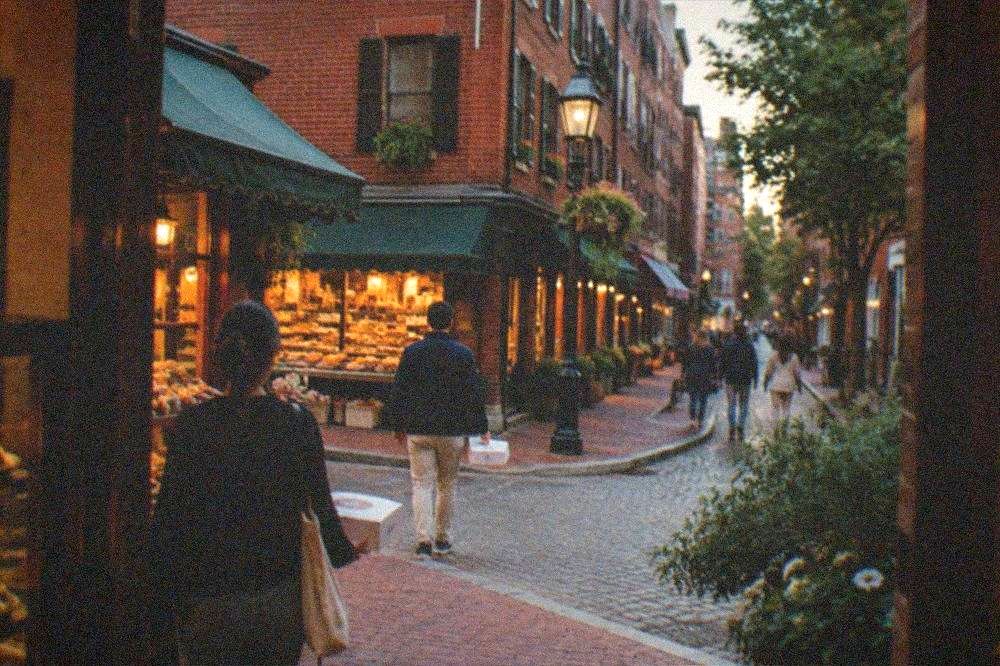
The connective walk is short and pleasant, past the harbor and through some of the oldest street grid in the city. Our full North End food tour guide breaks down the neighborhood's tour options, and the North End versus Chinatown comparison covers the same question for the other direction. A reasonable half-day loop: Quincy Market for a midday crawl, a slow walk to the North End for a pastry and an espresso, and the harbor in between.
For travelers who want a guided version of that loop, the North End roster is the deepest on any Boston category: the "Small-Group Italian Heritage Walk" from $70.40, rated 4.9 from 1,663 reviews, is the flagship, and shorter pizza and tasting walks run from $69. Those prices sit well below the downtown history-and-food walk, which reflects a shorter route and a narrower story rather than lower quality.
What Does A Half-Day Downtown Eating Route Look Like?
A sensible downtown route starts at Quincy Market in the late morning, moves through the plaza and Faneuil Hall, then walks fifteen minutes to the North End for pastry and espresso, with Chinatown an optional ten-minute extension in the other direction. The whole loop is flat, signposted and walkable, and it samples three food neighborhoods without a single transit ride.
The value of a route like this is that it converts a scattered food list into a plan. Instead of choosing between neighborhoods, you sequence them, and each stop answers a different appetite: the market hall for the savory classics under one roof, the North End for the sweet finish and the old-world streets, Chinatown for a dumpling detour if the day runs long. Families can peel off at any point, since every leg ends near a T station.
| Route leg | What it covers | Time and effort |
|---|---|---|
| Quincy Market crawl | Chowder, a seafood bite, a slice or sandwich, a sweet | About an hour inside the colonnade; flat and indoor |
| Faneuil Hall and plaza | The 1742 hall, street performers, pushcarts | Twenty minutes of looking; free entry |
| Walk to the North End | Harbor views, the oldest street grid in the city | About fifteen minutes on foot, flat |
| Optional Chinatown extension | Dumplings, dim sum and bakeries | About ten minutes from the market complex |
Timing the loop matters more than the order. Start at Quincy Market before 11:30 AM to beat the seating crunch, let the North End stop land in the early afternoon when bakery lines thin, and treat Chinatown as either the extension or the next day's plan. Anyone building a longer eating weekend can pair this loop with our getting around Boston without a car primer, which covers the transit connections that make multi-neighborhood days painless.
Planning Your Visit: Timing, Crowds And Getting There
Go on a weekday morning or the early evening window if you can, because midday weekends put the heaviest lines and the tightest seating at the food hall; the complex sits within a short walk of Government Center and Haymarket stations. The Boston Public Market, a 15-minute walk away at 100 Hanover Street, is the calmer indoor alternative.
Timing drives the experience more than anything else on this list. The food hall's natural rhythm runs quiet in the first opening hours, builds toward a noon-to-2 PM crush, and eases again in late afternoon. Street performers and pushcart activity peak on weekend afternoons, which is exactly when seating is hardest to find. If your itinerary allows only a weekend, arrive before 11 AM, eat your crawl early, and spend the crowded hours looking at the buildings instead of standing in lines.
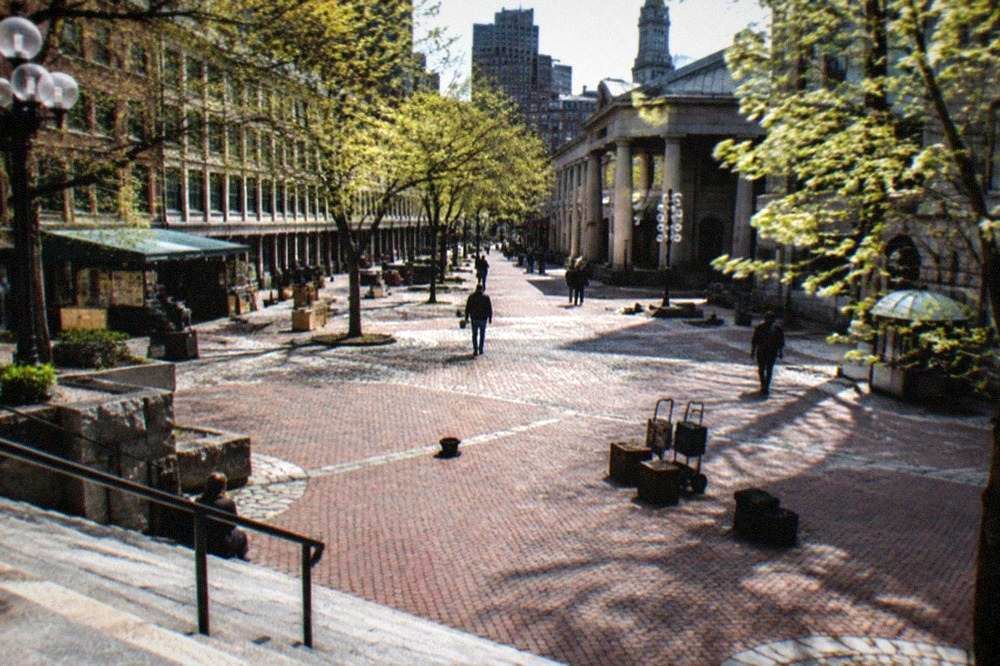
Getting there is simple by design. The complex sits at the crossroads of downtown: Government Center and Haymarket stations are both a few minutes away on foot, and the area is flat, compact and walkable in every direction. The wider transit picture, including the commuter rail connection that makes Salem an easy add-on day trip at roughly 16 miles and about 30 minutes from North Station, is covered in our getting around Boston without a car primer.
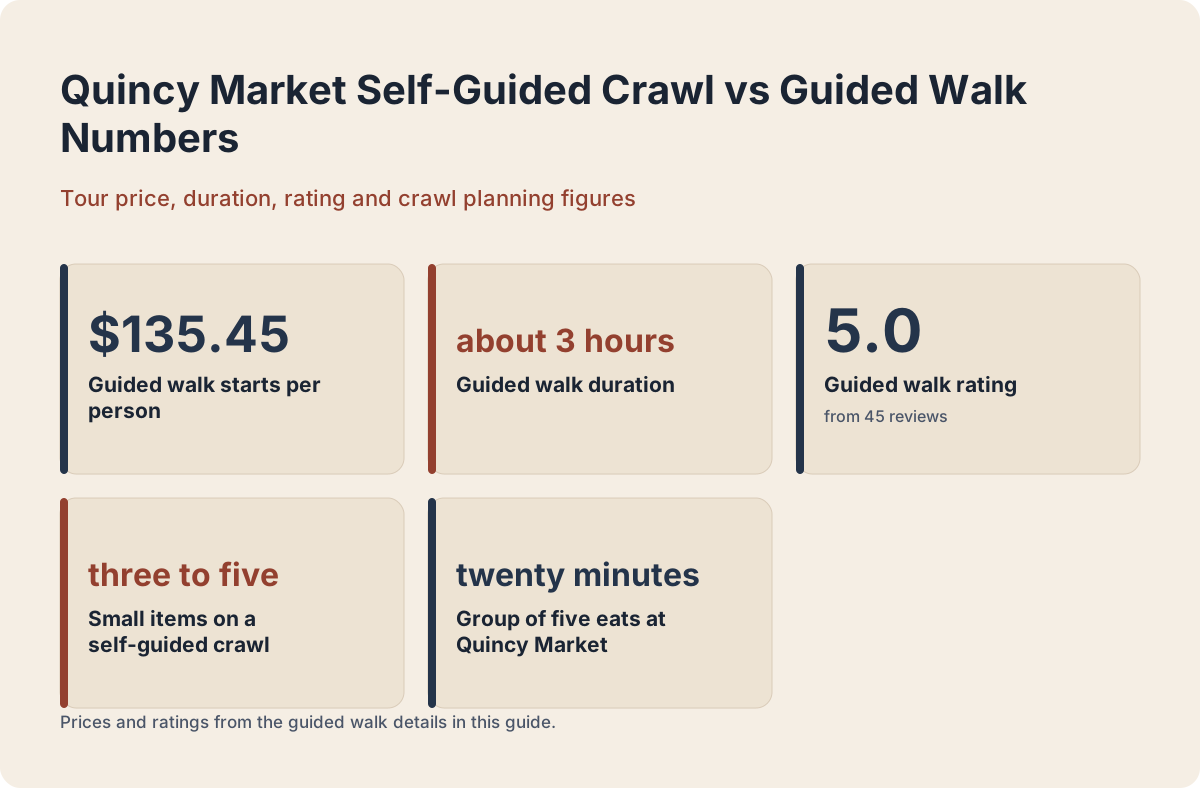
The comparison above is the honest decision frame. A self-guided crawl costs less and moves at your pace, but you choose blind, wait in the same lines as everyone else, and leave with food but no story. The guided walks cost more and lock you to a schedule, but the tastings are arranged, the history comes with the meal, and the route connects the market complex to the rest of downtown's food geography.
The seafood option deserves its own mention for seafood-first travelers. The "Seafood & Chowder History Walk" runs about 2 hours 45 minutes, starts from $169, and holds a 4.8 rating from 237 reviews; it is the most seafood-intensive guided option on the Boston roster and pairs naturally with a morning at the historic fish pier. It is not a Quincy Market tour, but it answers the same underlying question: where does this city's seafood story actually live?
The Chinatown walk is the other natural companion to a downtown day. The "Dumplings & Dim Sum Walk" covers about 2.5 hours of the neighborhood's Cantonese staples and newer regional spots, holds a 5.0 rating from 22 reviews, and starts from $135.45; it often books up, and the small review pool reflects a newer listing rather than a weaker product. Since Chinatown sits ten minutes from Quincy Market, it slots neatly into the same half-day loop described above.
Both of those walks sell out ahead of peak dates, and the operator's live listing carries current availability. One last planning note that visitors ask about constantly: two people can absolutely split a crawl here, and the shared-seating setup makes it easy; counters sell cups, halves and slices precisely because grazers are the core customer.
Common Questions About Quincy Market And Faneuil Hall
How much does food cost at Quincy Market?
You pay per item at each counter, so a self-guided crawl of three to five small items costs only what you order; lobster rolls carry the largest single-line cost, and cups, halves and slices are the crawl-friendly portions. Check each stall's board, since menu prices shift with the seasons and with seafood costs.
Is Quincy Market the same as Faneuil Hall?
No. Faneuil Hall is the 1742 marketplace and meeting hall, expanded in 1805-1806 and now a National Historic Landmark within Boston National Historical Park. Quincy Market is the 1824-1826 granite market expansion behind it, added to the National Register on November 13, 1966, and it is the building that holds the food stalls today.
What is the best time of day to visit Quincy Market?
Weekday mornings before 11 AM are the calmest, and the late-afternoon window after the lunch rush is the second-best option. Weekend midday is the heaviest period for lines and seating competition, so plan around it if your schedule allows.
Do you need a tour guide for Quincy Market?
Not for the food; the complex works fine as a self-guided stop. A guide adds the historical layer that the building does not explain on its own, and the Food & History Combo Walk, 3 hours from $135.45, is the tour built around that story.
Can you walk from Quincy Market to the North End?
Yes, in about fifteen minutes on foot along a flat route past the harbor. Many visitors combine a Quincy Market lunch crawl with a North End pastry stop in one half-day loop, and the two neighborhoods complement each other well.
Is there somewhere quieter to eat downtown?
The Boston Public Market at 100 Hanover Street is a 15-minute walk away, open Sun-Tues 8 AM-6 PM and Wed-Sat 8 AM-8 PM with vendor hours varying. It is an indoor local-produce market rather than a food hall, and it tends to run calmer than the Quincy Market complex.