What To Expect On A North End Food Tour
A practical walkthrough of the North End food tour format: pacing, portions, what the price covers, walking distance, group size, and how the feast season changes the streets.
What To Expect On A North End Food Tour
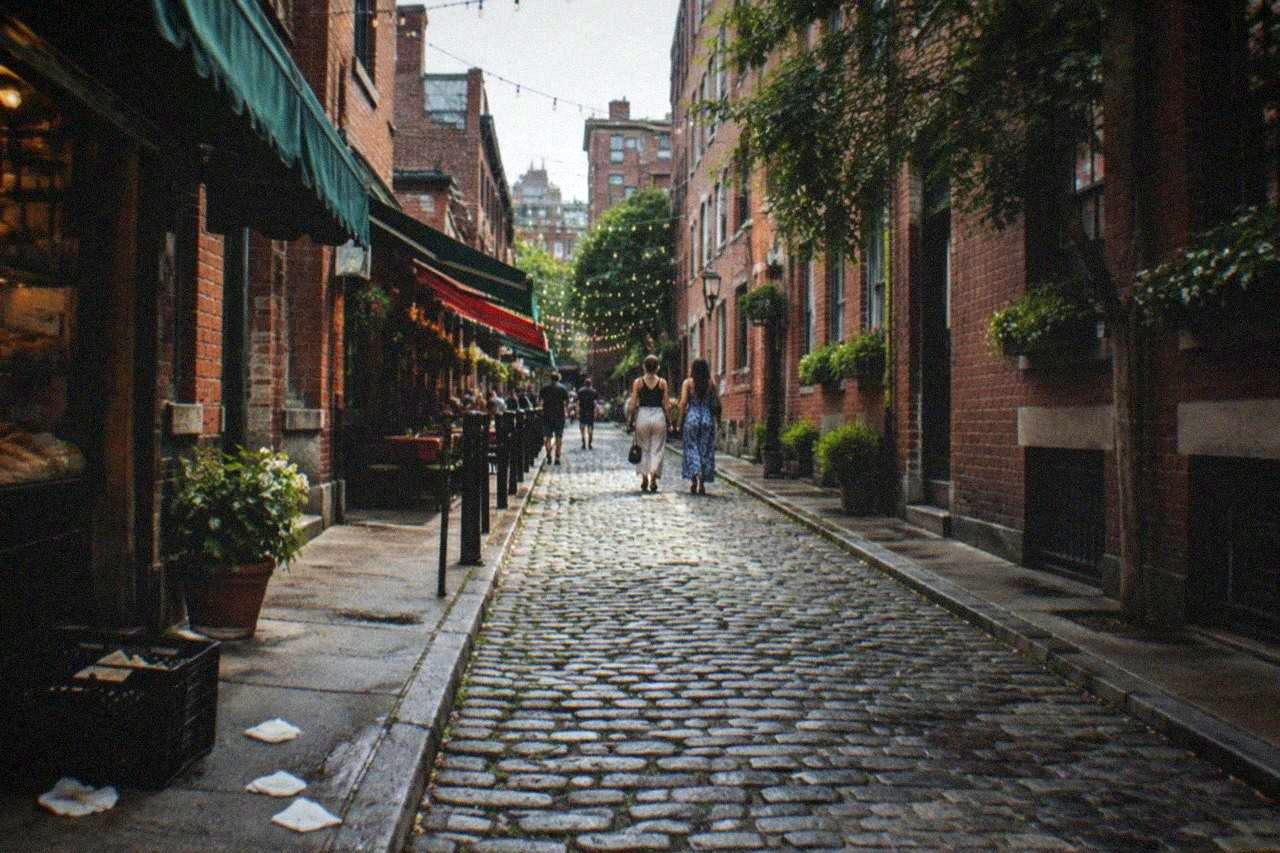
A North End food tour is a small-group guided walk, usually two to three hours, that visits five to seven bakeries, pizzerias, and specialty shops along Hanover and Salem Streets, with a tasting at each stop that together adds up to a full meal. Expect a guide who narrates immigration and neighborhood history between stops, a price that starts around $70 per person, and streets narrow enough that the walk itself rarely exceeds a mile and a half.
That is the format in one paragraph. The rest of this piece walks through each piece of it in detail, because the difference between a good tour day and a disappointing one usually comes down to details nobody thinks to ask about in advance: how much standing is involved, whether the portions constitute lunch, what happens when it rains, and why some dates in August are nearly impossible to book.
The North End earned its food-tour density honestly. It is one of Boston's oldest neighborhoods, wharfed out early in the city's history and home to a largely Italian community since the 1890s, per the city's own neighborhood history documentation. That layering is why tours here pair naturally: you are eating through a working residential neighborhood, not a themed district built for visitors. The city's North End history overview is worth a skim before you go, because guides reference it constantly and the stops land differently once you know the timeline.
The four North End listings on this site all follow the same bones: a licensed guide, a walking route, and tastings at independently owned shops. The "Small-Group Italian Heritage Walk" is the flagship, 4.9 from 1,663 reviews, from $70.40 for two hours. The "Pizza & Italian Classics Walk" runs 4.8 from 133 reviews from $69. The "Six-Tasting Little Italy Walk" is 4.8 from 306 reviews, from $86. And the "Wine & Limoncello, 3-Hour Walk" sits at 5.0 from 518 reviews, from $100. Three of the four are flagged as likely to sell out or often booking up, which tells you most of what you need to know about demand.
If you are still deciding between formats, the guide comparison piece on Boston Food Tours breaks the whole roster down by price and duration, and the detailed North End tour guide covers each listing stop by stop.
Duration is the cleanest way to narrow the field. The Heritage Walk and the Pizza & Italian Classics Walk both run about two hours, which suits travelers slotting a tour between other sightseeing. The Six-Tasting Little Italy Walk sits in the same range, while the Wine & Limoncello Walk stretches to three hours, the longest of the four, so plan an afternoon rather than a morning gap. Price tracks roughly with length and inclusions: $69 and $70.40 at the low end, $86 for the six-tasting format, and $100 for the walk that adds wine and limoncello alongside the food.
Review volume tells you as much as review scores. The flagship's 1,663 reviews dwarf the other listings, which means its 4.9 is well tested, while the 5.0 on the Wine & Limoncello Walk comes from 518 reviews, still a solid base but a newer listing by comparison. Since three of the four tours are flagged as likely to sell out, book the popular dates first and build the rest of your itinerary around the tour rather than the reverse.
How Long Is The Tour And What Is The Pacing Like?
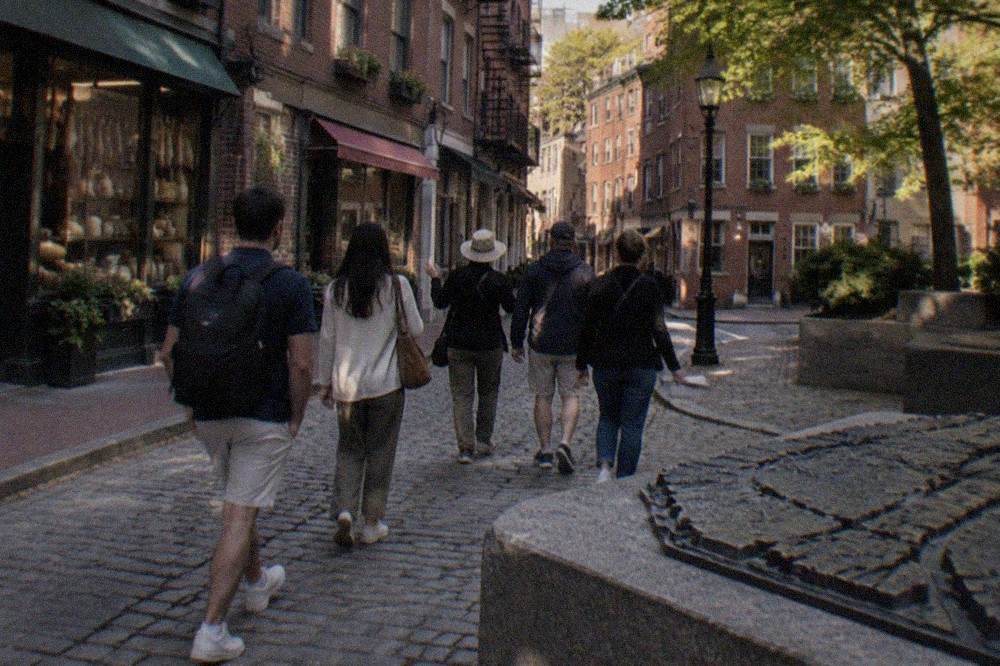
Most North End food tours run two hours flat, with the limoncello and wine option stretching to three. The pacing is stop-and-go: roughly 15 to 20 minutes at each tasting location, then five to ten minutes of walking between stops while the guide tells the next block's story. You are never walking more than a few minutes at a stretch, and you sit or stand at a counter for most of every stop.
The rhythm surprises people who picture a brisk walking tour with snacks attached. It is closer to a progressive meal. You arrive at a bakery, the guide has usually arranged the order in advance, you eat, you hear why that shop matters, and then you move. On a two-hour tour with six stops, that arithmetic means the day is mostly eating and listening, not marching.
Build your schedule around the ending, not the start. If a tour ends at 1:30 p.m., you will be genuinely full, so a 2 p.m. lunch reservation afterward is a mistake people make once. Dinner the same evening can feel optional. And because stops are indoors much of the time, the tour does not compress in bad weather; it just moves from counter to counter in rain gear.
One practical note on duration: the two listings described as 2-3 hours can vary with group speed and shop lines, so treat the upper bound as the real commitment when you plan the rest of your afternoon.
A tip guides mention repeatedly: use the restroom when a stop has one, not when you need one. The shops on the route are small, seating is limited, and public facilities in the neighborhood are sparse, so the mid-tour bakery with a customer bathroom is worth knowing about. Most guides announce it at the first stop. It is a small detail, but it is the kind of thing that shapes an afternoon more than any tasting does.
How Much Do You Actually Eat: Portions And Tastings
Expect five to seven tastings that together equal a substantial lunch: a slice or personal pizza, a pasta sample, a cannoli, a salumeria item like prosciutto or arancini, a cheese or olive-oil tasting, and an espresso or Italian coffee to close. Guides routinely tell guests to treat the tour as their meal for the day, and on the six-tasting format the advice is not a courtesy, it is accurate.
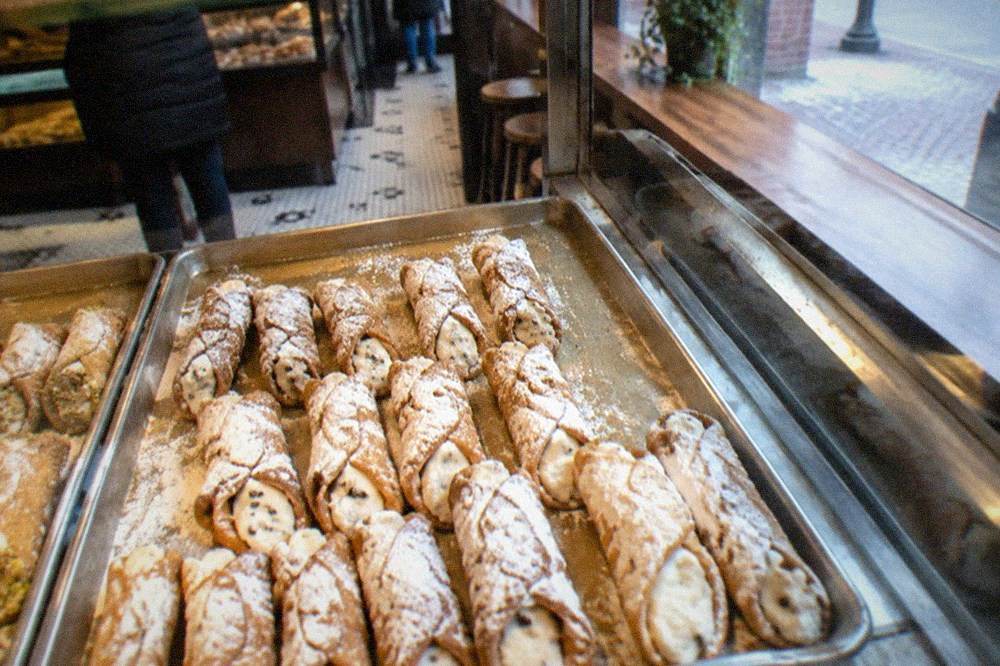
The portions are shop portions, not sample cups. A pizza stop on the "Pizza & Italian Classics Walk" means pizza by the slice from the coal-oven tradition of the neighborhood's founding pizzeria, which opened in 1926 and still uses its original oven. A pastry stop means a whole cannoli, filled to order, not a quarter of one cut into pieces for the group.
The cannoli segment deserves its own warning because it is the emotional high point of nearly every North End tour. The two famous Hanover Street rivals draw long lines, especially on weekends, and the debate between them is a genuine neighborhood institution: one is known for size and dozens of flavors, the other for a smaller, more traditional shell and filling. Tours typically get you past the line. If you want the full anatomy of that rivalry, the cannoli tasting guide covers every bakery in the neighborhood, including the 24-hour option on Salem Street.
Dietary needs are handled, but not silently. Tell the operator at booking, not at the first stop, because vegetarian swaps are usually easy while nut allergies and gluten-free requests depend on which shops the route uses that day. Vegan guests should expect a thinner experience; the pastry stops in particular have limited options.
How Much Walking Is Involved On A North End Food Tour?
The walking distance on a typical North End tour is modest, roughly one to one and a half miles total across the whole outing, broken into segments of two to five blocks each between stops. The neighborhood's core is compact and nearly flat, with some cobblestone and brick sidewalks, so the walk is easy for most fitness levels but not ideal for wheelchairs or strollers on the oldest streets.
The North End measures about one square mile, and tours use maybe a third of it. Hanover Street is the spine, Salem Street runs parallel one block over, and Cross, Prince, and Endicott Streets connect them. If you have walked the Freedom Trail's North End segment before, you have already covered most of the ground a food tour uses; Copp's Hill Burying Ground, laid out in 1659, often appears as a narration stop between tastings, per the city's burying ground records.
Footwear matters more than stamina. The brick and cobble surfaces are uneven in places, and in August the feast season adds temporary structures to some blocks, which can push pedestrian traffic into narrower lanes. Nothing on the route involves hills worth mentioning. Guests who comfortably walk a shopping mall can comfortably finish this tour.
What Is Included In The Price?
The price covers all food tastings, a licensed local guide, and the neighborhood history commentary; on the drinks-inclusive listing it also covers wine and limoncello tastings. It does not cover guide gratuity, additional food or souvenirs you buy at stops, or hotel pickup, which does not exist on any North End walking tour since everything starts at a meeting point inside the neighborhood.
Across the four North End listings, entry prices run from $69 to $100 per person: the classics walk from $69, the heritage walk from $70.40, the six-tasting walk from $86, and the wine and limoncello walk from $100. The jump between $86 and $100 buys the alcohol component and the extra hour, nothing else. Massachusetts law sets the drinking age at 21, and the statute is explicit that alcohol may not be furnished to anyone under 21, so the drinks-inclusive listings are effectively 21-plus bookings and every adult should carry ID.
Gratuity is the line item people forget. Cash in small bills is the standard, and the neighborhood's most famous bakery is famously cash-only as well, so a pocket of twenties serves two purposes on the same afternoon. The cost breakdown for Boston food tours runs the full budget math, including what people typically spend beyond the ticket.
One thing worth knowing that is easy to miss: tours that stop at the Boston Public Market can use its 100 Hanover Street location as a meeting point or a final stop, and the market runs Sun-Tues 8 a.m. to 6 p.m. and Wed-Sat 8 a.m. to 8 p.m., with individual vendor hours varying from the building's overall schedule.
Souvenir math is the other quiet line item. The blue-and-white pastry boxes tied with string are a genuine North End export, and guests routinely leave a stop carrying one for a spouse or a hotel fridge. None of that is on the ticket, and shops along the route are dense enough that a five-minute detour after the tour's final stop covers most of the classic gift list: pastries, olive oil, imported pasta, and coffee beans.
Group Size, Guides, And How Far Ahead To Book
Small-group listings on this roster cap their groups in the low double digits, and the guide is a local who lives the material rather than a script reader; three of the four North End listings are flagged as likely to sell out, so the practical booking window is one to two weeks ahead for weekend dates and several weeks ahead for summer Saturdays and any August feast weekend.
The group-size question matters more here than in most cities because of physics. North End sidewalks are narrow, shops are smaller, and a group of twenty crowds a bakery counter in a way a group of ten does not. The listings that advertise small groups are not doing it for intimacy marketing; they are doing it because the neighborhood physically punishes big groups.
Guides on the well-reviewed listings are a large part of the product. On the heritage walk, the 4.9 rating across 1,663 reviews reflects the same guides being praised by name week after week. The 5.0 from 518 reviews on the limoncello walk is a newer, smaller pool than the flagship's, but it is consistent. Where a listing's review count is small, treat the rating as directional rather than settled; the review-count discipline matters, and this site prints counts beside every rating for that reason.
Booking mechanics are simple. You reserve through the operator's live listing, most Boston food tours offer free cancellation up to 24 hours before departure, and you receive a meeting-point address in the North End by email. Arrive ten minutes early; the meeting spots are street corners, and the guide leaves on time because shop reservations downstream are fixed.
Weather, Timing, And The August Feast Season
Tours run year-round in almost all weather, with indoor stops doing most of the work in rain and cold; the biggest timing variable is not the forecast but the calendar, because the North End's August feast season brings street closures, huge crowds, and the highest demand of the year, while winter tours trade crowds for shorter lines and cold walking segments between warm shops.
The feast season deserves real planning attention. The neighborhood runs a multi-week summer festival calendar, with the Fisherman's Feast, San Gennaro, and the 107th annual Saint Anthony's Feast, the largest Italian religious festival in New England, filling late August with processions and food stalls. Saint Anthony's alone draws more than 250,000 people over its run. If your tour date collides with a feast weekend, expect a spectacular backdrop and a slower route; if your goal is quiet shopping afterward, book around it.
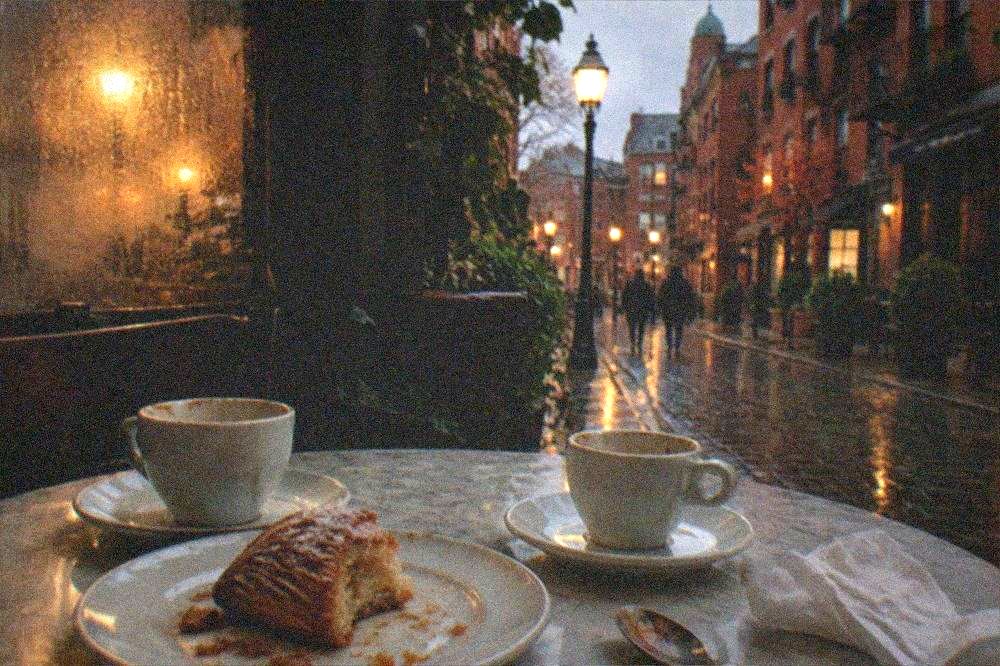
Time of day shapes the experience too. Morning tours catch the bakeries at their freshest and the streets at their emptiest, which is why the espresso-and-pastry stops land best before noon. Afternoon tours get warmer light for photos and livelier street atmosphere. Evening formats exist mainly on the dessert-and-cocktails side of the roster, where the "Cocktails & Cannoli Dessert Walk" pairs a cocktail with the pastry stops.
Who Each Format Suits Best
The two-hour heritage and classics walks suit first-time visitors and anyone who wants the neighborhood's greatest hits in a single morning; the six-tasting walk suits serious eaters who want more stops and can handle a variable 2-3 hour window; the three-hour wine and limoncello walk suits adults who want the full evening-out feel with alcohol built into the price rather than added afterward at a bar.
Families should note the split carefully. The alcohol-inclusive listings are 21-plus by statute. For kids, this site's family food tour guide points to the donut and sweet-treat listings downtown, which are built around shorter legs and kid-proof portions, though a pizza-and-cannoli route through the North End works for many children too because the stops are short and the food is familiar.
For a two-person trip, the sharing question comes up often: tastings are per person on these listings, not shareable plates, so a shared booking is really two full experiences walked side by side. The shared-tour breakdown covers which formats reward pairing and which punish it.
| Listing | Format | Price from | Rating | Duration |
|---|---|---|---|---|
| "Small-Group Italian Heritage Walk" | Guided walk, tastings and history | $70.40 | 4.9 from 1,663 reviews | 2 hours |
| "Pizza & Italian Classics Walk" | Pizza-focused guided walk | $69 | 4.8 from 133 reviews | 2 hours |
| "Six-Tasting Little Italy Walk" | Six-tasting progressive meal | $86 | 4.8 from 306 reviews | 2-3 hours |
| "Wine & Limoncello, 3-Hour Walk" | Tastings plus wine and limoncello | $100 | 5.0 from 518 reviews | 3 hours |
Prices sit at the low end of the range a planning visitor should expect for the category, which is the quiet advantage of the North End listings: the neighborhood's density means more tastings per dollar than formats that require transport between districts.
If the North End is only one stop on your trip, the Chinatown versus North End comparison is the natural next read, since those two neighborhoods anchor most of Boston's food-tour traffic and they suit different appetites entirely.
Common Questions About North End Food Tours
What to Expect on a North End Food Tour?
A two to three hour small-group walk through five to seven Italian bakeries, pizzerias, and specialty shops, with tastings that add up to a full meal, a local guide narrating the neighborhood's history between stops, and prices from $69 to $100 per person depending on format.
How much do you walk on a North End food tour?
Roughly one to one and a half miles total, broken into segments of two to five blocks between stops. The route is nearly flat but includes brick and cobblestone surfaces, so wear closed, comfortable shoes.
Will the tastings fill me up?
Yes. A slice of pizza, a pasta or salumeria tasting, a whole cannoli, and an espresso constitute a substantial lunch. Plan your next meal accordingly; a dinner reservation the same evening is usually unnecessary.
Is the wine and limoncello tour suitable for under-21 guests?
No. Massachusetts law prohibits furnishing alcohol to anyone under 21, so the drinks-inclusive listings function as 21-plus bookings, and every guest should bring ID.
Do North End food tours run in bad weather?
Yes, year-round and in rain, since most tasting stops are indoors and the walking segments are short. The one calendar variable that really changes the experience is August feast season, when street closures and crowds slow the route.
How far ahead should I book?
One to two weeks for weekend dates and earlier for summer Saturdays and feast weekends. Three of the four North End listings are flagged as likely to sell out, and most operators offer free cancellation up to 24 hours before the tour.